Start with 4 sessions, or take 8, 12, up to 16 — the number of sessions and the schedule follow your family's needs. Every session your child finishes one robot that really moves: from a motorised brick car to robots that follow a line, dodge obstacles, and take commands from a phone. The same robotics curriculum we have taught in Jakarta's partner schools since 2014.

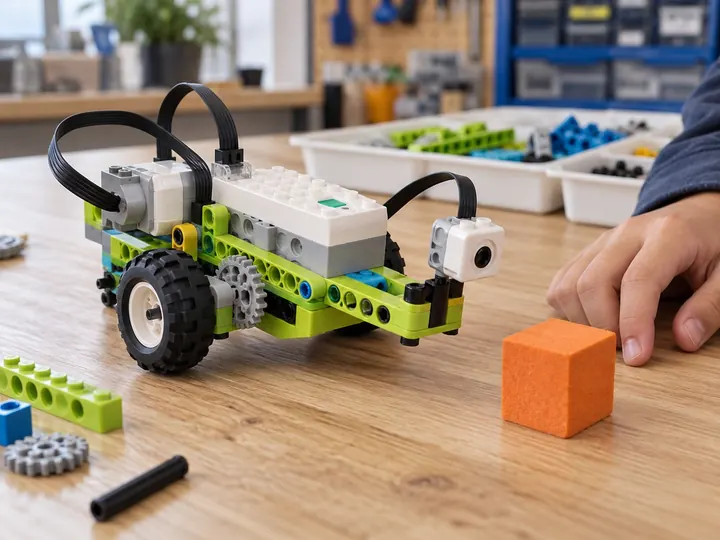
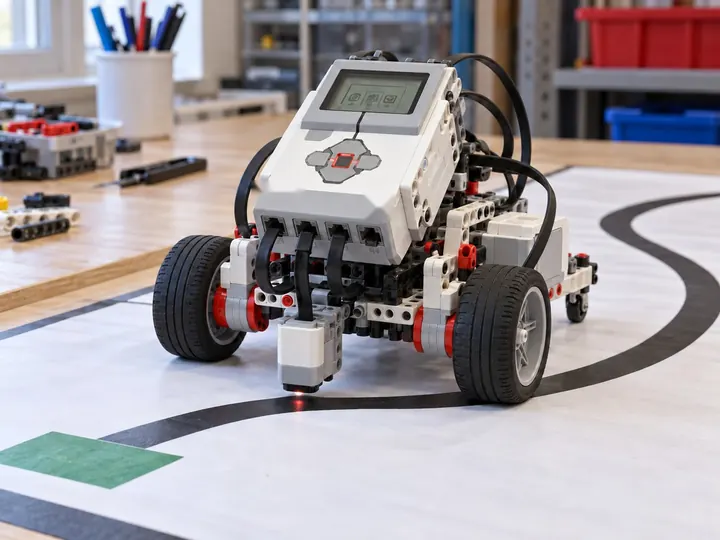
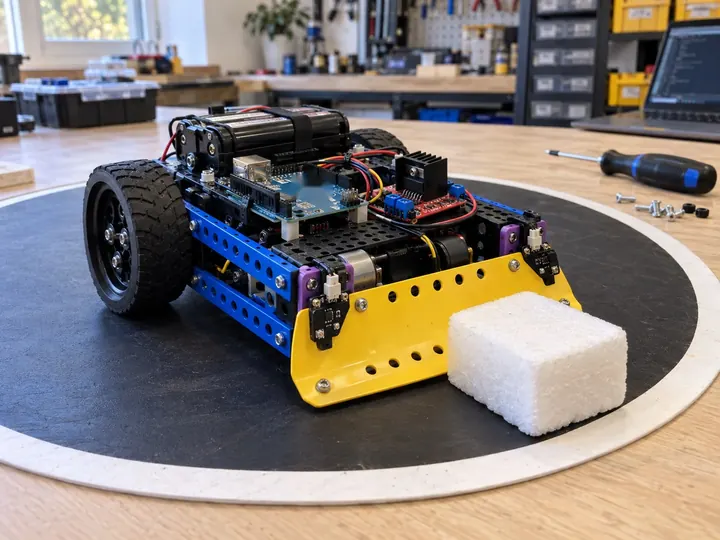
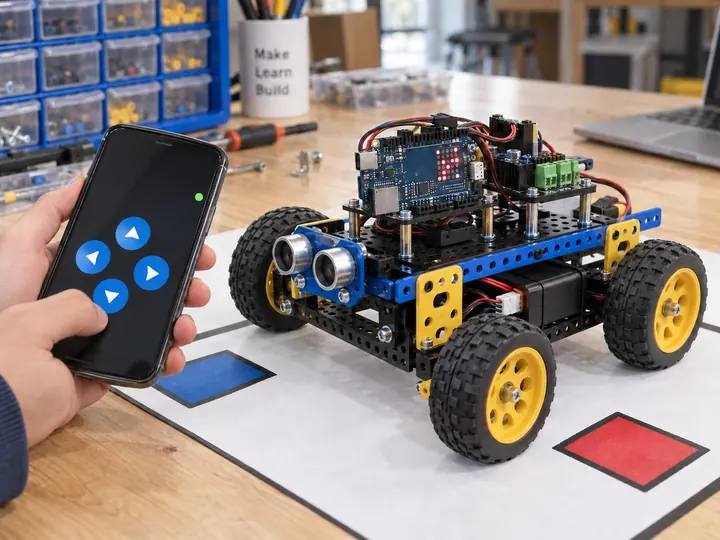
Children learn mechanics, sensors, and programming logic through robots that are finished and moving within one session. From motorised bricks and gears, up to sensor robots with block coding, to microcontrollers, text code, and phone control. Every robot ends with a "test drive" and an engineering journal page they draw themselves.
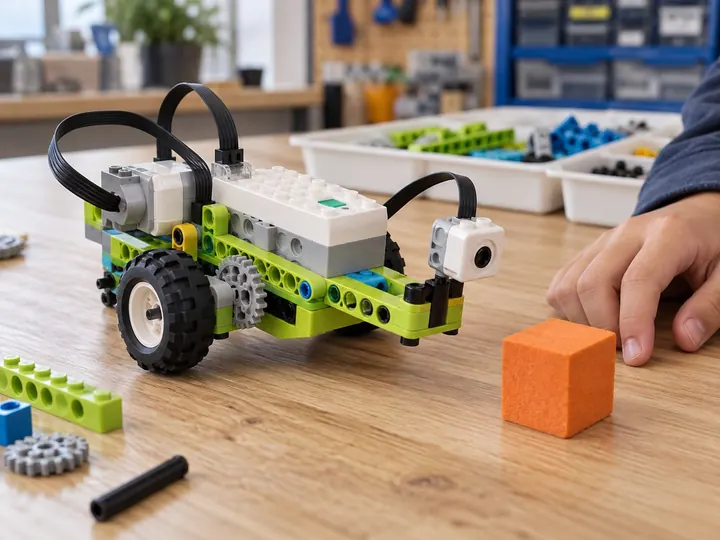
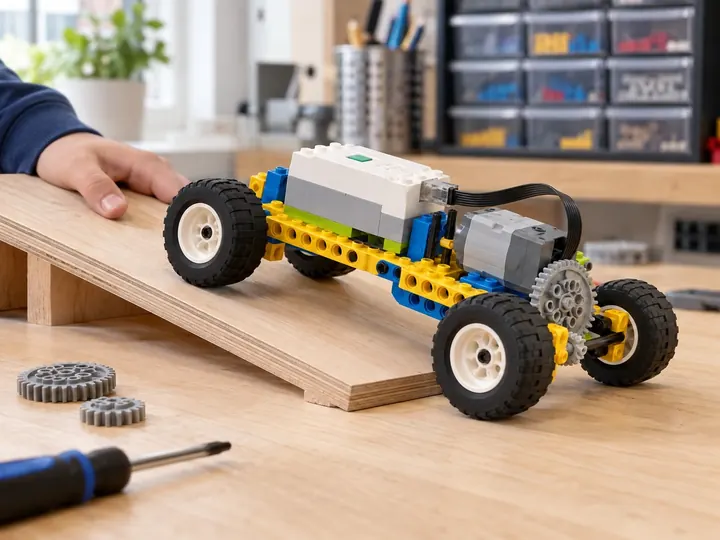
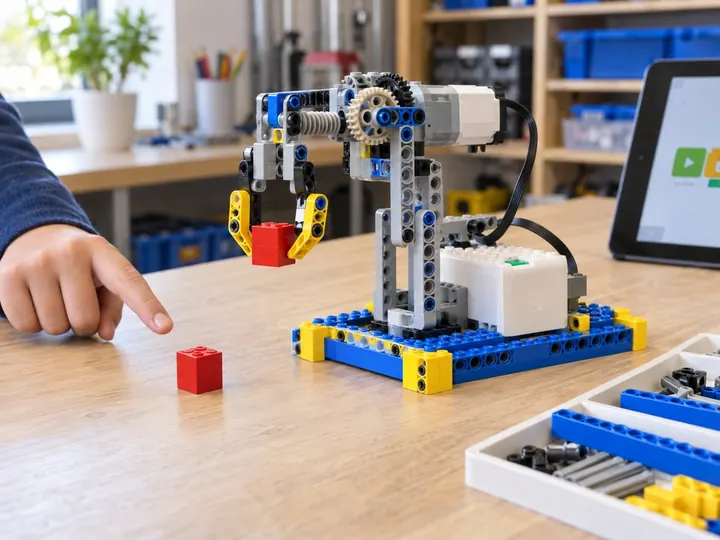
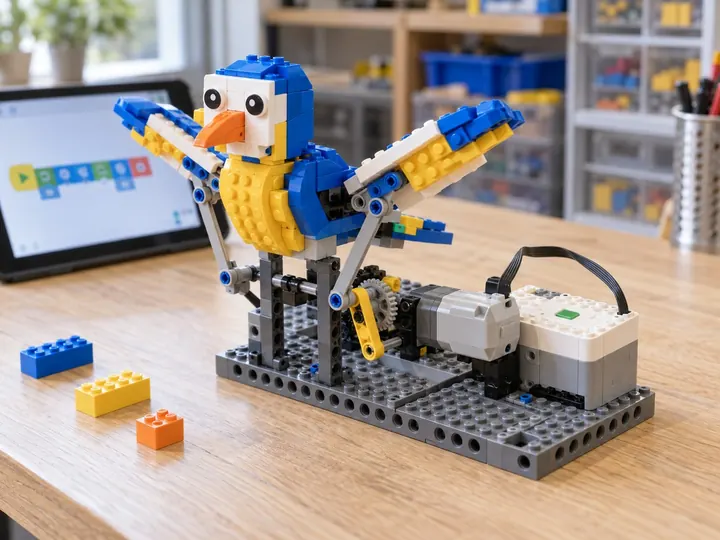
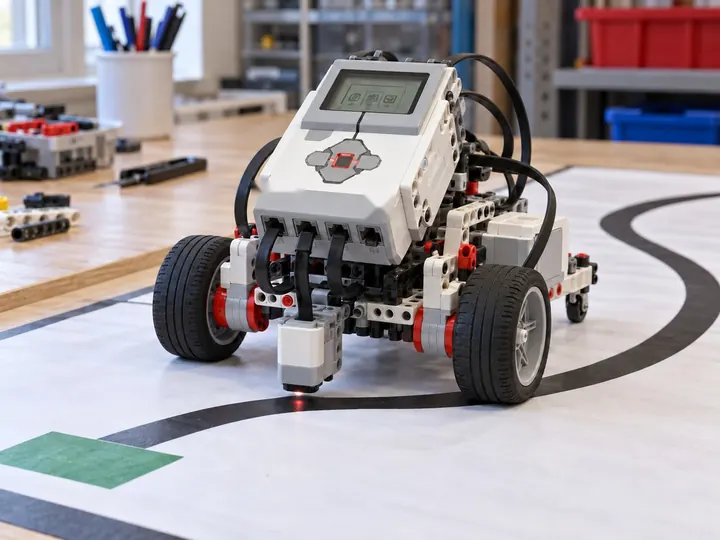
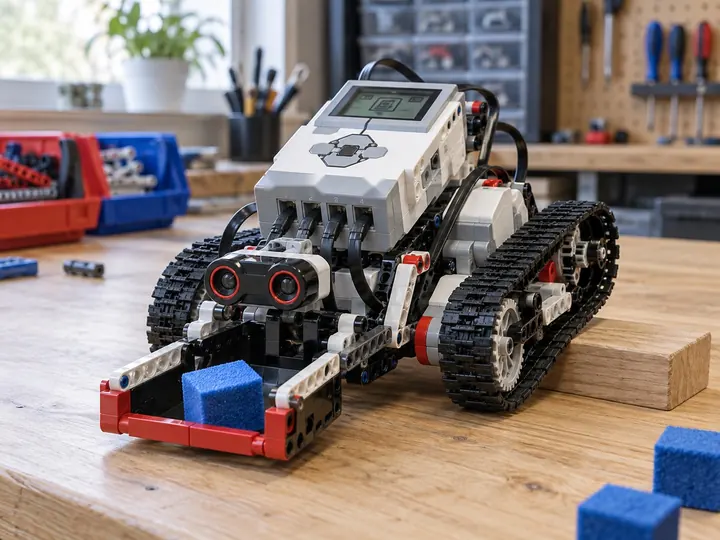
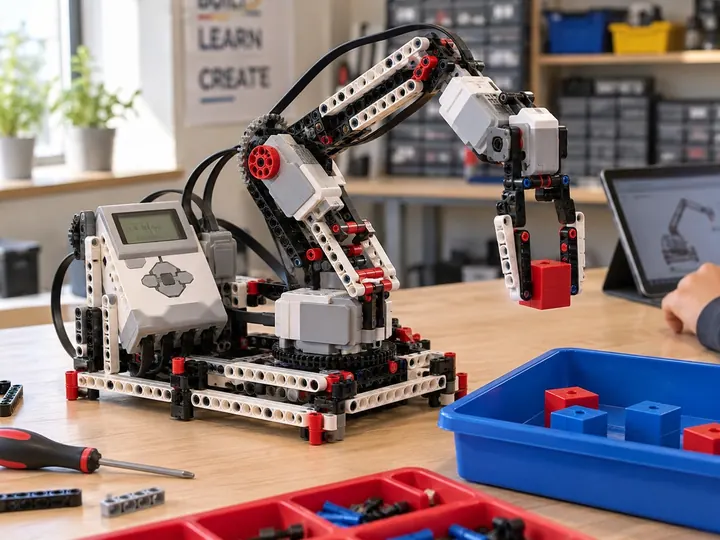
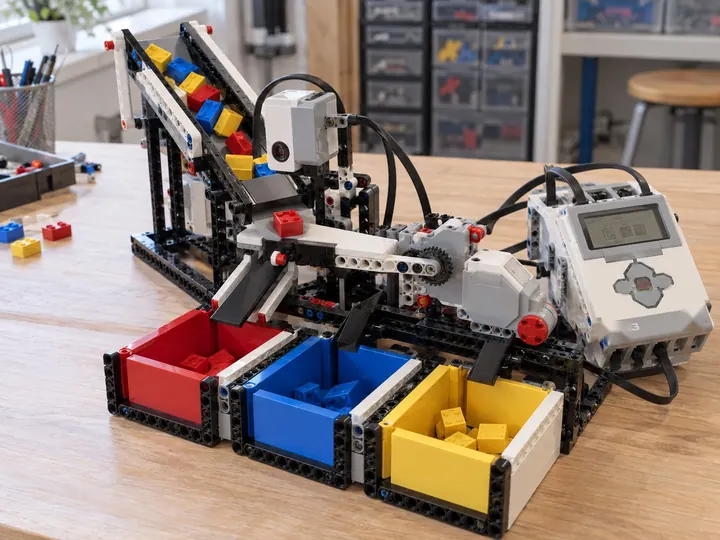
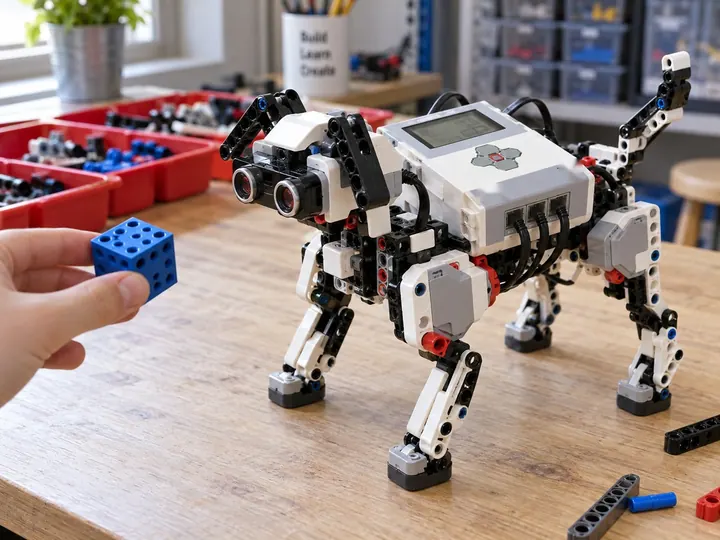
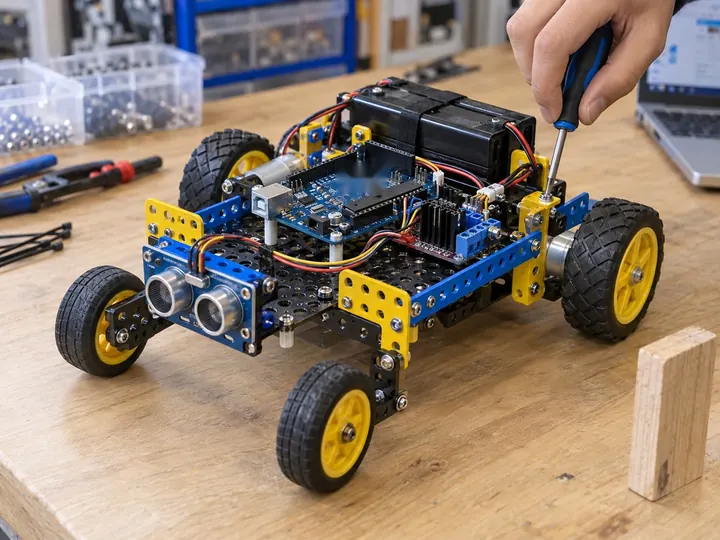
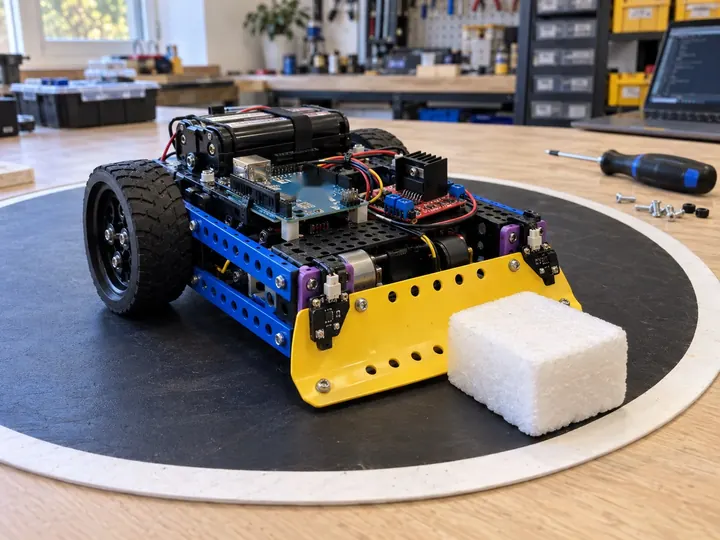
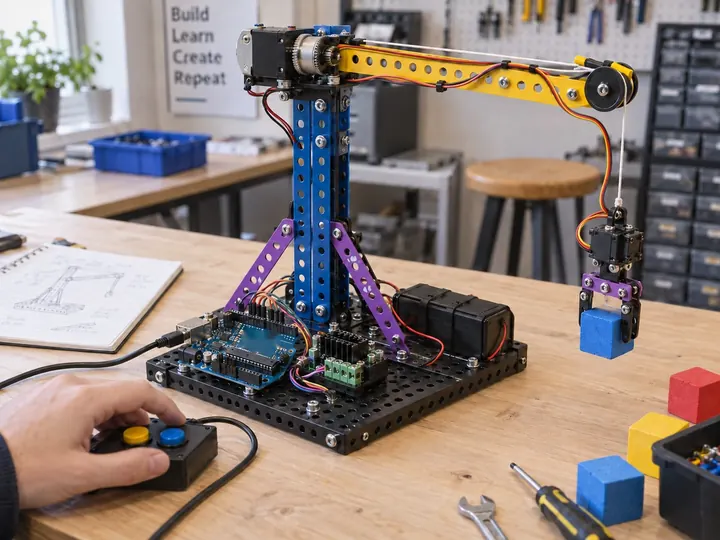
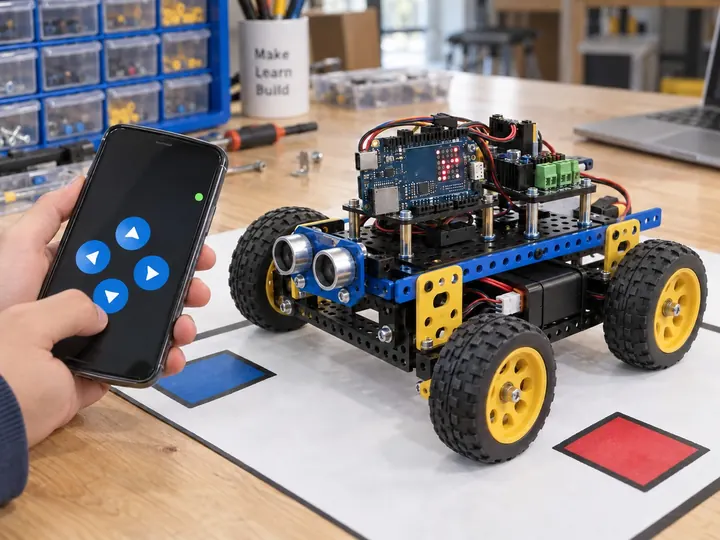
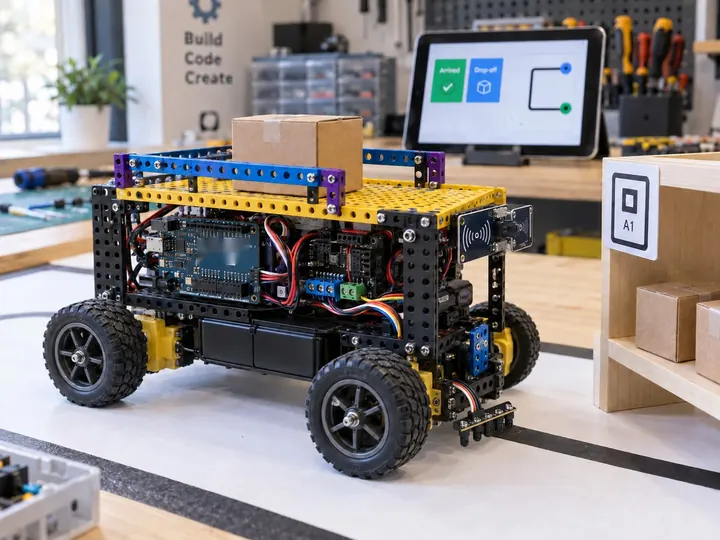
And many more: obstacle-avoiding robot, six-legged walker, smart traffic light, door alarm… These are a few of the projects across six Robo Lab levels — one moving robot per session. At the final level your child designs their own robot for a school robotics competition or an IoT project at home.
Six levels, three robot platforms that grow with your child. Kindergarten and early primary start with bricks, motors, and gears that move straight away; older primary children move into sensor robots and block programming; middle and high schoolers build with microcontrollers, text code, and internet connectivity (IoT). Join at any level that suits your child's age — no need to start from the beginning, and you can stop whenever you like.
Fill in the form and we'll message you on WhatsApp within one working hour to set up a trial class. Your child builds their first robot straight away — usually a motorised rover that drives in that same session.
Private, with a teacher who comes to your home with a complete robot set, or online with a robot kit we ship ahead. Decide the number of sessions (from 4) and the schedule.
Every session your child sketches the design and records the test-drive results in their journal. Every level ends with a report, a certificate, and a mini "robot demo" for the family.
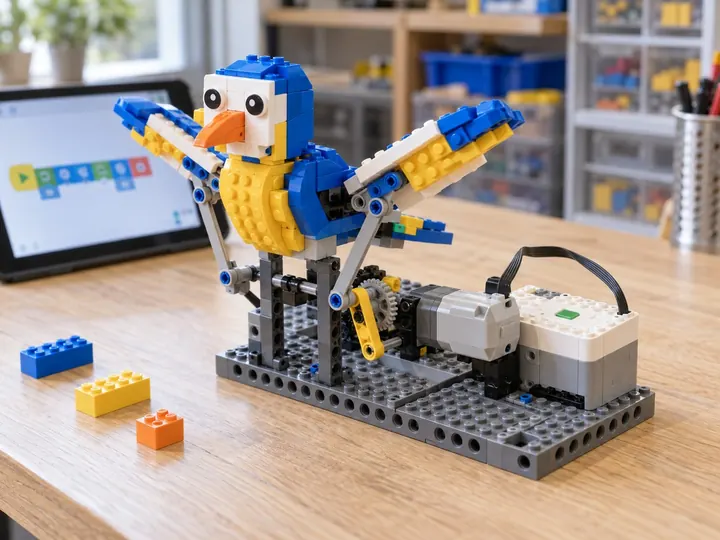
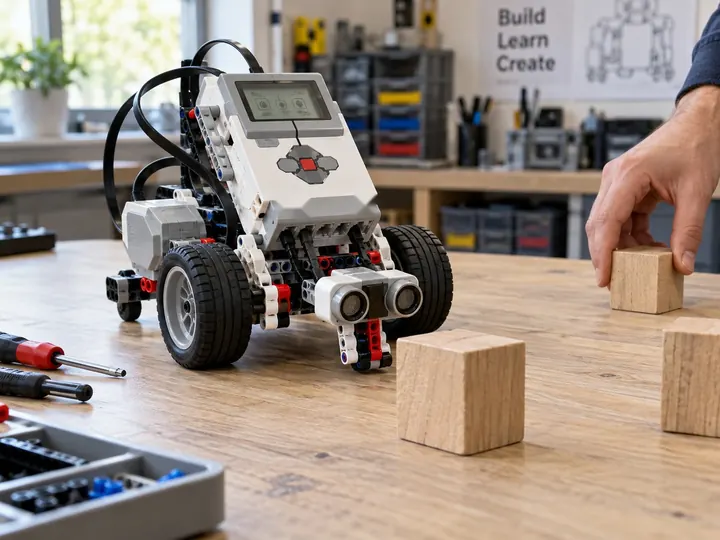
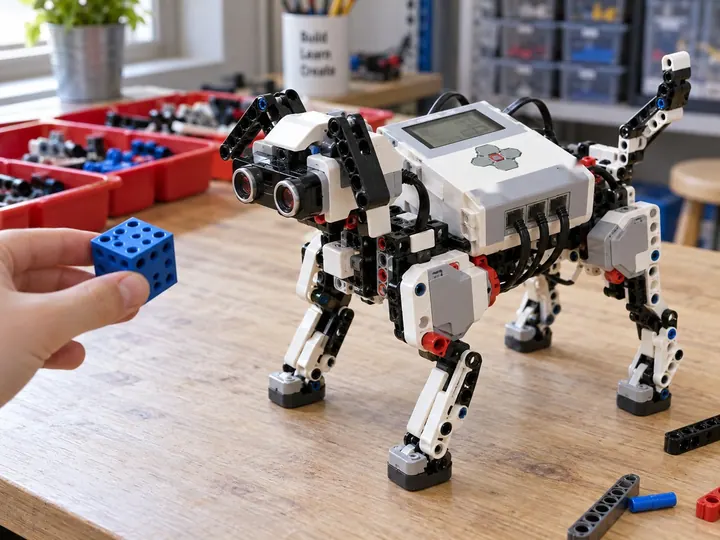
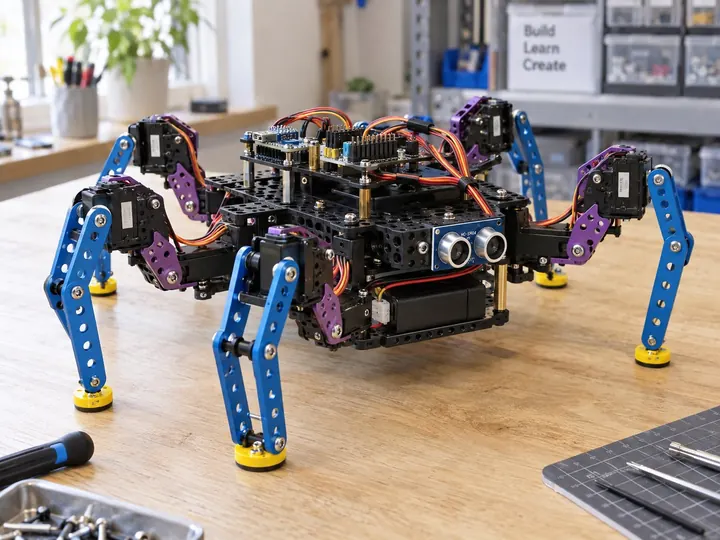
Children already know gadgets as spectators. At Robo Lab they become the makers: building, programming, and fixing until the robot moves.
Gear ratios, speed, angles, and if-then logic are used straight away to make the robot move correctly — far easier to remember when they turn up in class.
No waiting for months. One session, one moving robot — your child feels capable straight away and wants to build something smarter.
Robot not moving? Find the cause — gear, cable, or code — then fix it.
Breaking a big task into steps that can be programmed.
At the final level, children design their own robot from scratch.
Demonstrating their robot to parents at the end of every level.
Big robots are built in pairs — one builds, one programs, then swap.
One pin in the wrong hole and the robot leans. Robotics teaches care without feeling like it.
The same system we use in partner schools, now for your family.
For private classes, the teacher checks in by GPS on arrival and checks out when finished. You know exactly when it started and ended.
Every session, the teacher uploads photos and a short video of the robot in motion — you can watch even from the office.
What concept was learned today, what was understood, what to revisit — written by the teacher, sent to your WhatsApp.
A journal filled in every session: design sketch, program, test results. By the end of a level it is a little portfolio for competitions or school.
At the end of a package your child receives a progress report and an official Light Education certificate, just like students at our partner schools.
Something came up? Let us know a day ahead and the session is moved, not lost.
Every Robo Lab teacher holds a teaching certification and teaches robotics daily at Light Education's partner schools.
Every teacher is Child Safeguarding certified through TeachUp and bound by Light Education's written code of conduct.
Every teacher is certified in HSI First Aid and CPR Training — ready to act should anything happen.
Every robot runs on low-voltage batteries that are safe to touch; no mains electricity and no soldering in children's classes. Screwdrivers and small tools are used under the teacher's supervision; small parts are kept in a compartment box that goes home with the teacher.
1 child, 90 minutes, at home or a place of your choice. The teacher brings the robot set, a laptop/tablet, and a test arena; after class the robot is documented and the set goes home with the teacher.
4–6 children, 60 minutes, by video call. A robot kit for one level is shipped before class; the teacher guides step by step and everyone builds together at home.
Learn in person with friends, in a robotics room with test arenas and full sets on the shelves.
Our studio is being prepared for in-person robotics classes: small-group build tables, line-following and mini-sumo arenas, and robot sets for every level. Meanwhile, private and online classes run as usual.
Opening date will be announced on this page.
Private 1-on-1, together with a sibling, or a small group with friends. At home, at school, at a café, or online. Weekday afternoons, weekends, or an intensive during the school holidays. A robot-themed birthday, a holiday robo camp, robotics competition preparation, or a special theme (robot animals, smart home, vehicles)? Just tell us what you need — we'll build the class with you. No fixed packages, no rigid minimums.
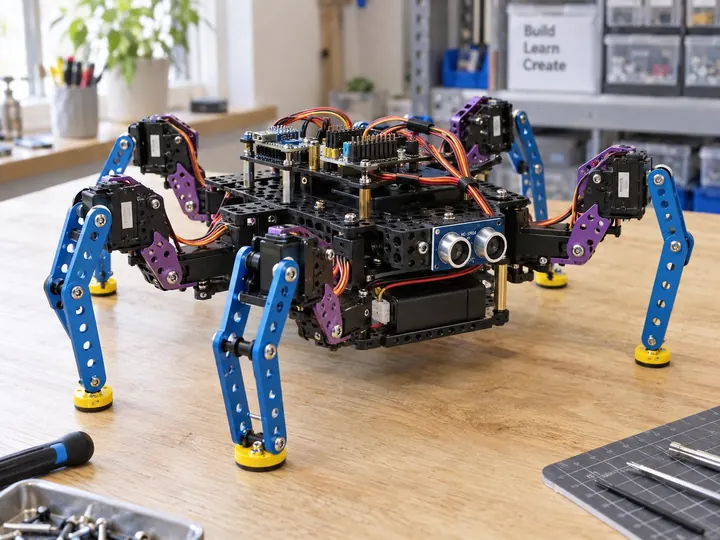
A robot set to match the level — motorised bricks and gears for the early levels, a smart brick with motors and sensors for the middle levels, a metal frame with a microcontroller for the advanced levels — plus a toolbox, an engineering journal, and an illustrated guide. For private classes the teacher brings it; for online classes a one-level kit is shipped to your home before the class begins.
Every level, your child takes home two robots they built themselves to display or play with again. Full sets for independent learning can be ordered separately.
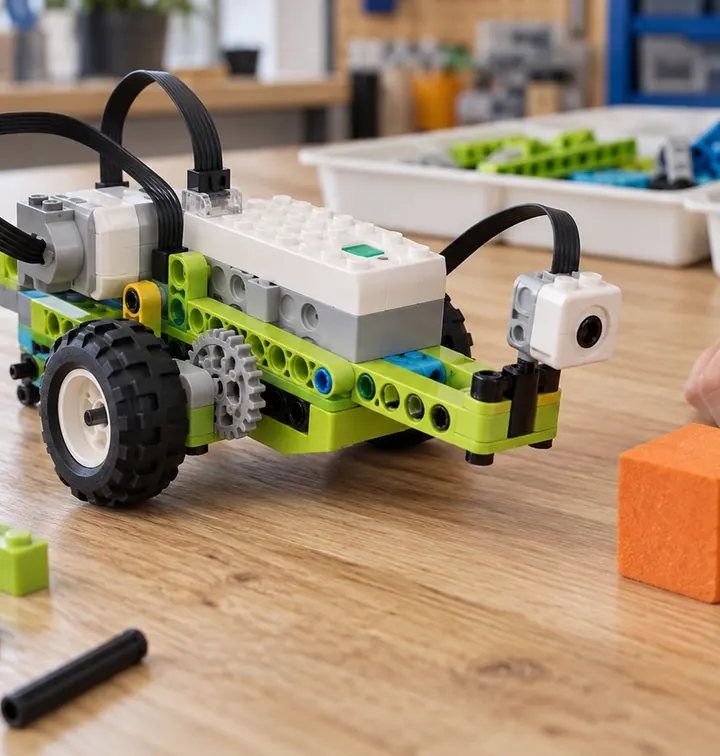
A 2-hour party at home or a venue. 6–12 children each build a motorised rover, then race on the arena we bring; closing with a robot puppy and a robot arm every guest can try. We bring the teacher, robot sets, and arena.
Ask about birthday packages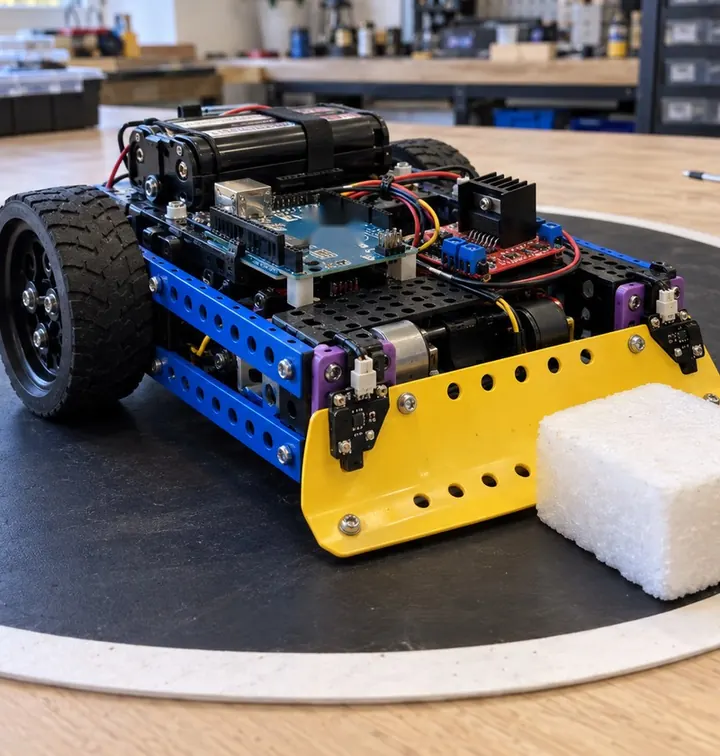
An intensive 3 or 5 consecutive days, 2 hours a day, one robot a day (rover, gripper, line follower, sumo, phone control), closing with a mini tournament and a demo for parents on the last day. At home, an agreed venue, or online with a kit. Ideal for the June–July and December breaks.
Ask about Robo Camp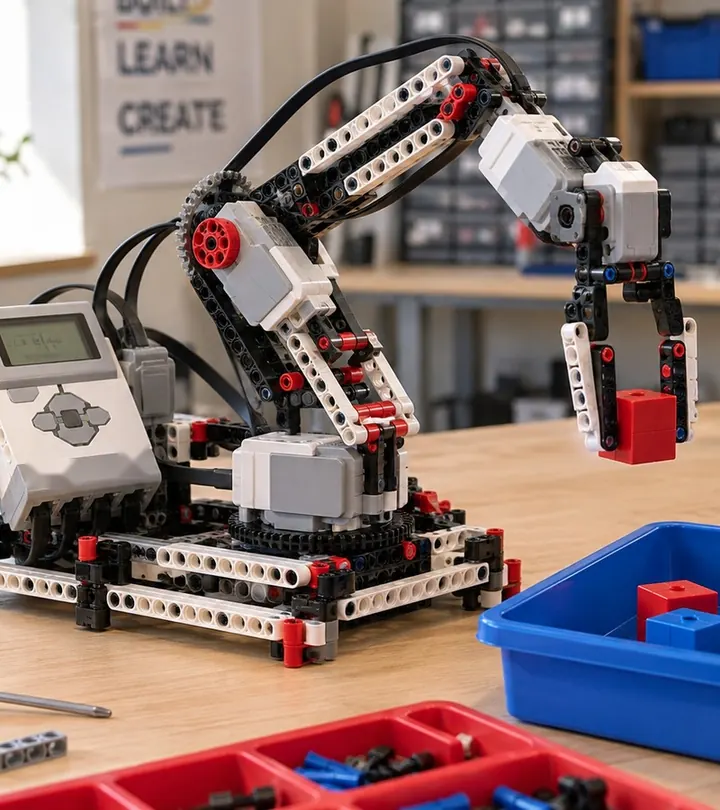
For schools that want their own robotics class: 2–3 days of teacher training using the Robo Lab curriculum (6 levels), complete with lesson plans, student worksheets, and robot-set recommendations. Or leave it to us as an after-school programme, as in our 25+ partner schools.
Ask about school programmes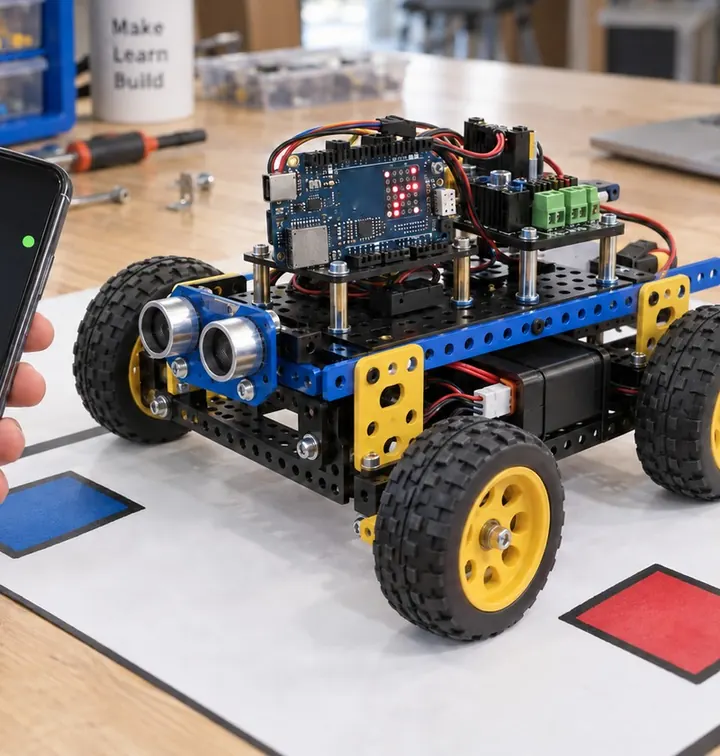
For older primary to high-school students entering a school or national robotics competition (line following, mini sumo, robot missions): 6–8 sessions designing and tuning their own robot until it is match-ready. Guided by teachers used to coaching competition teams.
Ask about competition prepOne table, one big robot: parent and child become an engineering team in a 2-hour weekend session, closing with a family race. Perfect for Father's Day, Mother's Day, or simply a Saturday morning.
A voucher for 4 sessions + a robotics toolbox, sent as a physical or digital card in the giver's name. A gift that doesn't end up in a cupboard.
You host 4–6 neighbourhood children; the teacher comes once a week with all the robot sets; the cost is shared and the host's child learns free.
Short 4-session packages on one theme: robot animals, vehicles & racing, smart home, robot arms & mini factory.
Robo Party at scale for 30–100 employees' children; rotating build stations, a race arena, and a small self-built rover to take home. Proposal available for HR.
A single 90-minute "build & race a rover" session for communities, cafés, or social groups. An easy first step before a package.
The same curriculum and teachers these schools use for their after-school programmes.
School names are shown as references for Light Education's after-school programmes; they are not sponsors of Robo Lab.
After signing up you receive an invitation link. Every friend who joins any package through that link adds one free session for your child and theirs. No limit.
Yes. Levels 1–2 use no code at all: children learn through bricks, motors, and gears. Programming comes in gradually from level 2 with colour blocks on a tablet (drag-and-drop), and text code is only introduced at level 5 for middle schoolers.
Yes. Every robot runs on low-voltage batteries; no mains electricity and no soldering in children's classes. Small parts for the early levels are large-sized and kept in a compartment box; no sharp tools are used.
Yes, from age 5. Level 1 is designed for K–Grade 1: big bricks, one motor, and a robot that drives within 20 minutes. Older children go straight into the level that suits them.
No. For private classes the teacher brings a complete robot set every session. For online classes we ship a one-level kit to your home before class. Every level your child takes home two robots they built; full sets for independent learning can be bought separately if you wish.
A one-level robot kit is shipped to your home before class. The teacher guides over a video call with the camera on the build, step by step; every child builds at the same time and programs on their own tablet/laptop. Parents just provide a table and a device for the video call.
Yes. Robotics uses maths (ratios, angles, speed), physics (forces, friction, energy), and the programming logic that appears in middle- and high-school Informatics. Levels 4–6 also prepare children for school and national robotics competitions.
Sessions can be moved with a day's notice. If you stop, remaining sessions can be transferred to another child or kept for up to 3 months.
Online with a kit: free, and we ship the trial kit. Private at home: a small charge for the teacher's transport, refunded if you continue to a package. No obligation after the trial.
No cost, no obligation to continue. Fill in the form; we'll arrange the rest.